




Mobility training for personal trainers is no longer a “ nice-to-have”; in 2026, it’s a must. With more people understanding the long-term effects of poor posture and a lack of mobility, clients are now asking their trainers to incorporate mobility training into each session.
Whether you’re an aspiring Level 3 PT or are highly experienced, understanding how mobility works and knowing how to support your clients can ensure better outcomes, while also setting you apart from other professionals.
In this post, we’ll explore why mobility is a top priority for clients and how you can diversify your skills.
What is Mobility Training?
Mobility training is sometimes confused with general flexibility training, but the two are very different. As a targeted approach to improving range of movement, motion, and functional fitness, this form of training incorporates dynamic movement.
These movements replicate sports-related actions and everyday activities, such as carrying shopping, bending down to tie shoelaces, and climbing stairs without pain or muscle soreness.
It’s important to remember that mobility isn’t just about being able to walk, because it focuses on coordination, muscle strength, flexibility, and joint health.
Why More Clients are Asking for Mobility Training

Mobility training isn’t a new trend that will come and go on TikTok and Instagram; it’s a solution to a very real problem that people across the world are facing.
We’re living longer, our working habits have changed, and the internet means clients are more aware of what makes a personal trainer reputable.
An Ageing Population
The days of blue rinses and knitting patterns are long behind us, with individuals over 65 seeing their golden years as a chance to travel and enjoy life. But research from Harvard Health shows that around a third of adults over 65 experience decreased mobility.
Seniors don’t just want independence; they want to stay active and do the activities they love. PTs who understand mobility training can positively influence people in this age group and enhance their quality of life.
Hybrid and Remote Work
More people are working from home or in hybrid work settings than ever before. But this often means that people are seated for 8-10 hours each day, which can cause a range of muscle and joint issues – both of which impact mobility.
It might not seem like much, but losing that 10-minute walk from the train station to the office can impact a person’s muscle function and make daily activities more challenging.
Education
Social media means that clients are more savvy about their fitness today. When these people arrive at training sessions, they expect the trainer to understand their mobility limitations and develop a plan to fix them.
The Benefits of Mobility Training for PTs
The fitness industry might have a high demand for trainers, but this demand also means that successful trainers need to set themselves apart.
Understanding the principles of mobility training and being able to incorporate them into sessions offers a range of benefits, including:
Differentiation
Setting yourself apart as a PT can be challenging, but showcasing your ability to assess movement, clearly explain where your clients are lacking mobility and know how to develop personalised mobility plans can differentiate you as a mobility coach UK clients trust.
Client Acquisition and Retention
Many PTs choose to specialise in working with specific client groups, and some will have higher mobility needs than others.
For example, if you want to specialise in designing exercise programmes for older adults, being able to implement mobility into sessions can help you attract more clients.
And if you consistently deliver results for these clients, you can retain them and look forward to word-of-mouth referrals.
Employability
While many PTs eventually choose self-employment, newly qualified trainers often gain experience in a gym or health club setting.
When you can prove that you understand mobility training principles and know how to implement them in individual and group fitness sessions, you’re a more attractive candidate for employers.
What Mobility Training Looks Like in Practice
A big part of understanding how mobility training works is understanding how it differs from flexibility.
While flexibility focuses on passive range of motion (how far a particular joint can move), mobility is an active range of motion (how far a person can move the joint while maintaining stability and strength).
For this reason, mobility training isn’t about simple stretching; it involves the following principles:
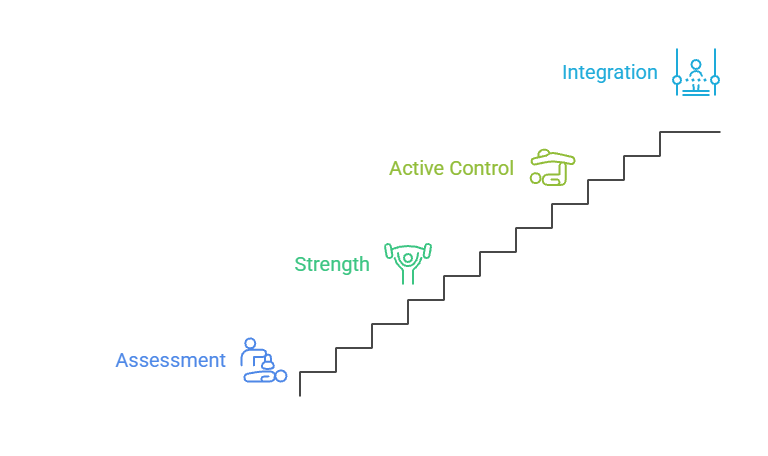
- Assessment: Every trainer should begin with an assessment to see how well clients move through different exercises, including strength training and functional movement.
- Strength: Mobility improvements often come from loading positions, which involve exercises like split squats and Jefferson curls.
- Active Control: Implementing end-range lift-offs, isometric holds, and articular rotation programmes the client’s nervous system to understand that a range is usable and safe.
- Integration: Instead of adding some mobility training to a standard session, PTs should integrate it into the standard session, adjusting exercises to enhance mobility.
Even mobility exercises for beginners, like controlled hip circles or deep squat holds, follow these principles
How to Build Your Mobility Training Skills
If you’re unsure of how to incorporate mobility training into your coaching, you can find continuing education courses that cover range and movement, while some certification bodies are now offering specialisations for trainers who want to focus on mobility.
But our online PT courses focus on how the body moves and teach you vital anatomy and physiology principles. Once you understand how mobility relates to these, you can implement mobility training into your sessions.
In many cases, it’s about learning how to assess different clients and knowing your limits when creating recovery and mobility programmes.
If someone has persistent pain or movement issues due to a previous injury, a professional physiotherapist or GP should assess them.
The Bottom Line
Clients don’t just want to build strength or lose weight anymore: they want holistic fitness that enhances their quality of life.
Strength and mobility training combined with cardio can make a massive difference to each client’s quality of life, and establish you as a trainer that delivers lasting results.
If you’d like information on how to learn about mobility training or are ready to progress your career with our online accredited courses, please book a free call with The Fitness Circle today.
Download Brochure
Why not take the first step towards your brand new career in fitness now?
Not sure where to start?
Our Success Advisors are eager to walk through your options and answer any questions you have.
0800 677 1175


From our Instagram