




Intense cardio isn’t always the answer to getting fit. In fact, Zone 2 training is a proven fitness principle that can be beneficial for creating sustainable training programmes.
Throw in the fact that it’s adjustable for people of all ages and fitness levels, and it’s easy to see why Zone 2 training is becoming essential for PTs who want to attract and retain clients.
In this post, we’ll cover what you need to know about Zone 2 training and how you can incorporate it into sessions once you gain a Level 3 PT Diploma.
What Is Zone 2 Training?
When it comes to Zone 2 cardio, UK trainers can use it to support clients without overwhelming them. The process focuses on a constant state of cardiovascular exercise at a low to medium intensity.
In traditional cardio training, there are 5 different zones. Zone 1 represents light exercise such as slow walks, while Zone 5 is the most intense state, where the heart rate is near maximum effort.
So, Zone 2 training is about increasing heart rate and breathing while controlling intensity levels. Examples of the training include:
- Cycling
- Jogging
- Brisk walking
- Rowing
- Elliptical workouts
- Swimming
It’s not necessarily about the type of exercise; maintaining intensity is the most important factor in Zone 2 cardio.
How Does Zone 2 Heart Rate Coaching Work?
One thing to know about Zone 2 training is that there’s no set ideal heart rate, as reaching the zone depends on a person’s fitness level, age, and body type. The best way is to
There isn’t one universal Zone 2 heart rate because it depends on factors including age, fitness level and individual physiology.
The first step is to work out the person’s maximum heart rate by using this formula:
220 minus their age = the maximum heart rate
So, a 35-year-old’s maximum heart rate would be 185 beats per minute.
Zone 2 is roughly 60% to 70% of the maximum heart rate, which means the range for a standard 35-year-old would be 111 to 129 beats per minute.
This is a general estimate only, as you’ll also need to factor in whether the client has a heart condition, other health conditions, and their fitness level.
Talk Tests
Looking for a simple way to figure out whether your client is in the Zone 2 training phase? Establish where they can talk.
For example, intense exercise often means that the person struggles to talk, but when someone is in Zone 2, they can typically have a conversation and make complete sentences.
Why is Zone 2 Training Beneficial?

While many people associate Zone 5 training with the best outcomes, research shows that low-intensity exercise can support weight loss when performed regularly (ScienceDirect).
This is because the body can use fat as an energy source, leading to improved fitness over time.
Accessibility
Many people struggle with intense workouts due to physical conditions or low fitness levels, but Zone 2 training is an excellent way to build endurance and support fat loss without pushing clients past their limits.
Fitness Improvements
Zone 2 exercise is ideal for creating a fitness foundation that you can gradually build on. Once clients get used to regular low-intensity exercise, addingcircuit training or HIIT routines can further enhance their weight loss and stamina.
Faster Recovery
High-intensity training often leads to longer recovery times because of the stress it places on the cardiovascular system and the muscle strains it can cause.
Zone 2 training is different because it’s gentler, so clients can do workouts more often.
How to Incorporate Zone 2 Training into Sessions
Zone 2 is a low-intensity, steady-state form of aerobic exercise, so incorporating it into client sessions is relatively simple. Here are some tips for implementing it:
- Assess Each Client Individually: When working with clients, assess each client’s fitness level and maximum heart rate. This ensures you understand what Zone 2 looks like for them.
- Start Slow: New clients with limited fitness might be best with a brisk 20-30 minute walk 3 times a week, while people with higher fitness levels can tolerate longer workouts.
- Don’t Forget Other Training: Cardio is a great way to burn fat and build endurance, but it shouldn’t replace other training methods. Strength training is particularly beneficial for boosting the metabolism and turning fat into muscle.
- Integrate Effectively: The average person should get a minimum of 150 minutes of moderate-intensity physical activity a week. Integrate Zone 2 training to fit each client’s current workout plan.
Zone 2 vs HIIT
While Zone 2 is essentially aerobic base training, HIIT focuses on short bursts of intense activity. Neither is inherently better than the other, as both offer unique benefits and have different purposes.
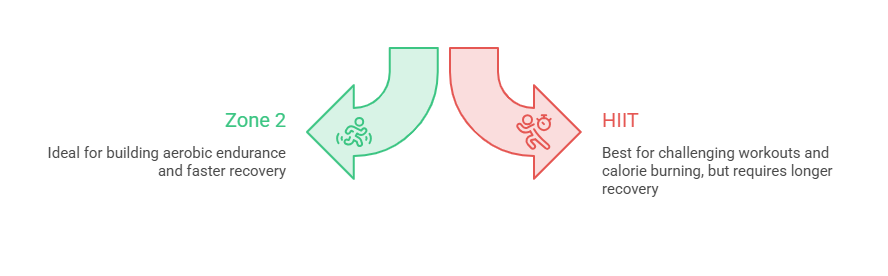
Zone 2:
- Low intensity
- Long duration
- Gradually builds aerobic endurance
- Faster recovery
HIIT:
- High intensity
- Short bursts of activity
- More challenging
- Longer recovery times
Many trainers find that incorporating both into individual and group classes offers the best results. The client’s individual needs and goals are the important things to consider.
Final Thoughts
Granted, Zone 2 training might not seem as professional as high-intensity exercise, but that doesn’t mean it’s not an excellent strategy to integrate into client sessions.
Everyone – including new clients, active individuals, and seasoned athletes can benefit from Zone 2 training.
Whether you’re a newly qualified PT, have years of experience or are considering a career in the fitness industry, learning how to implement low-intensity training can make a significant difference to client outcomes.
If you’re considering becoming a PT or are new to the industry, ourOnline Personal Trainer Course combines the Level 2 Gym Instructor and Level 3 Personal Trainer qualifications into one course.
Our online programmes are fully CIMSPA-accredited and available in flexible payment plans. Pleasebook a free call today to discuss your options.
Download Brochure
Why not take the first step towards your brand new career in fitness now?
Not sure where to start?
Our Success Advisors are eager to walk through your options and answer any questions you have.
0800 677 1175


From our Instagram